
A real estate ISA, or inside sales agent, is the person who calls your internet leads so your agents don't have to. The job is to reach a new lead within minutes of registration, keep calling until the lead answers, find out what the person actually wants, and hand ready buyers and sellers to an agent while keeping everyone else warm. I started rokrbox in 2013 to do exactly that for real estate teams, and our callers in College Station, Texas have worked more than 3 million internet leads since. This is what I have learned about the role, what the data says, what it costs, and how to hire for it.
The short version
- ISA stands for inside sales agent. Some teams say inside sales assistant, and a remote or outsourced one is often called a virtual ISA. Whatever the title, it is the person whose job is to pick up the phone and call your leads.
- An ISA works the leads you already have. It is not a lead source.
- The core jobs are real estate lead follow-up and lead nurture: call new leads instantly, keep calling until they answer, find out what the person wants and when, hand ready buyers and sellers to an agent, and keep the rest warm until they are ready.
- At rokrbox the role is unlicensed on purpose. Our callers never talk about properties, prices or availability. They talk about the person on the other end of the line, then introduce an agent.
- You can staff the role three ways: hire someone in-house, hire overseas, or hire a U.S.-based service. Each has a cost and a failure mode, and I cover them below.
- The two numbers that matter most are how fast the first call happens and how many calls follow. Everything else is detail.
Why the job exists
In 2011 I was working for Frank Klesitz at Vyral Marketing, traveling two or three times a month to every real estate conference and mastermind we could get into. One of the first was at BoomTown's headquarters in Charleston, South Carolina. They had brought in fifty of the top-producing agents and teams in the country to share what was working.
There were a lot of different paths to success in that room. There was exactly one shared frustration: speed to lead and follow-up. Every one of them was paying for internet leads. Almost none of them wanted to make the fourth, fifth or seventh call it takes to reach one.
Two years later a client of mine, Spring Bengtzen in Salt Lake City, asked if she could just hire me to solve it for her team. I flew one way to Utah, spent two months in her unfinished basement, and we hired an inside sales assistant named Carly to call every lead and warm up the deals for the agents. It worked. Then Carly signed up for real estate classes, because that is what happens to good ISAs. Spring called me with the good news and the bad news, and we were back where we started.
Someone had to make the calls. That someone was me, and the one-person operation I started in 2013 became rokrbox. The name comes from the rocker box, the gold-rush tool that separates gravel from gold. That is still the whole job: sift through the leads, find the people who actually want to move, and hand them to an agent. More of that story is on my page.
What a real estate ISA actually does all day
There are two kinds of ISA work, and it helps to know which one you are hiring for. Outbound ISAs prospect: expired listings, for-sale-by-owners, circle prospecting around a new listing, purchased lists. Inbound ISAs work people who already raised their hand: website registrations, portal inquiries, sign calls, and the old leads sitting in your CRM. Outbound is about productivity, how many dials an hour. Inbound is about availability, who is free the moment a lead registers. Rokrbox does the inbound side. We call your new and old leads.
The work itself is simple to describe and hard to keep doing. Call every new lead the moment it registers. If they do not answer, keep calling, at different times of day, through the first week. Keep a long-term follow-up going for the people who are real but months away. And go back through the old leads sitting in your CRM, because some of them are back in the market. It is not complicated. It is just relentless.
When a lead answers, the conversation follows a framework we call C.A.R.E.: Contact, Ask questions, Recommend, Encourage. The caller confirms why they are calling, then asks the questions an agent needs answered: what has you thinking about a move, which areas, what price range, how many bedrooms, when, do you own or rent, have you talked with a lender, are you working with an agent. Then they recommend the next step and encourage the person to take it.
If you have trained ISAs before, you know those questions as LPMAMA: location, price, motivation, agent, mortgage, appointment. That checklist is the right list of facts. The difference is in how you collect them. Read as a form, it sounds like a form, and people hang up on forms. Asked as a conversation about the person's move, it gets you the same facts and a reason for them to keep talking.
When someone is ready to talk with an agent, we connect them live. Every call is logged on the lead in your CRM, so your agent can pick up where the caller left off instead of making the consumer start over. Here is how that works step by step.

What three million leads taught us
We have scorecarded every call since 2013. Here is what the data says about internet leads, and none of it is what most follow-up plans assume.
Phone calls create the opportunities. We define an opportunity as a buyer or seller who wants to move within ninety days, is not under contract with another agent, and is ready to take the next step. Of all the opportunities we have identified for clients, 74 percent came from a phone call we made, 25 percent from a text we sent, and 1 percent from an email. Most teams build their follow-up the other way around: drip email first, texts second, a call if someone gets around to it.
The first minutes decide the outcome. A lead who just typed a search and landed on your site is in an emotional state. Call them then and you are talking with someone who is thinking about moving. Wait five to ten minutes and the odds of qualifying that lead fall off a cliff. Wait until tomorrow and you are a stranger.
It takes more calls than anyone makes. A forced website registration is a cold lead. Reaching one reliably takes six or more attempts. Log into your CRM and spot-check a few leads. Most got one call, maybe two. Anything more is practically a miracle, because commission-based agents get lead fatigue and move on to higher-value work.
The first week is where conversion lives. When we studied the performance of millions of leads, about half of all conversions came from speed to lead, the first call, and another 39 percent from follow-up in the first week. So we put our effort where the conversion is: the instant call and the attempts in the first week that follow it. Then we keep calling the twelve-month leads too, because nobody else will.
When you need a real estate ISA, and when you don't
An ISA is not the answer to every problem on a real estate team. Here is how I would decide.
You probably need one if:
- You pay for leads, from portals, ads or your own website, and nobody is calling them within minutes.
- Your agents call a new lead once or twice and move on. Spot-check ten leads in your CRM and count the attempts.
- Leads arrive at night and on weekends, when nobody is at a desk.
- Your CRM holds thousands of old leads nobody has called in a year.
- You are the rainmaker, and you are still the one making the follow-up calls.
You probably don't, yet, if:
- You don't have steady lead flow. An ISA works leads; it does not create them.
- Your agents won't take live transfers or call leads back the same day. Fix that first, or you are paying to find buyers and sellers your team won't talk to.
- Your business is all referrals and repeat clients who already have your cell number. Those people want you, not an assistant.
Four mistakes I see teams make
Handing the leads straight to agents. This is where I found Spring in 2013. She paid for the ads and the website and gave the leads to commission agents, who you would think would be hungry enough to work them. They were not. These are cold leads that take six-plus attempts, and agents stop at two.
Hiring one in-house ISA and calling it coverage. I am not against in-house ISAs. But inbound leads are about availability. When Spring's ISA was at her desk, conversion was great. When she went to lunch, went to the bathroom, or clocked out at five, the number one strategy for converting an internet lead, calling it immediately, stopped happening. One person cannot be available every hour the leads come in. A team can.
Texting and emailing instead of calling. Nobody likes making phone calls. I understand the temptation. But one percent of opportunities come from email. If your plan is a drip campaign and a property alert, you are paying for leads and not working them.
Trying it out. Four to six million homes sell in the United States every year. Hundreds of millions of internet leads are sold to real estate professionals in the same year, many of them duplicated, recycled or non-exclusive. The data is not what pays your bills; the closings are. You do not get to the closings by trying a lead source, a CRM or an ISA for a month and seeing how it feels. You get there by measuring: how fast was the first call, how many attempts followed, how many people did we actually talk to, how many were opportunities. Do or do not. There is no try.
In-house, overseas, or a U.S. service
There are three ways to staff the role. I have watched clients try all of them. A virtual ISA can be any of the last two: the word describes where the person sits, not who trained them or who manages them.
| In-house hire | Overseas hire | U.S.-based service | |
|---|---|---|---|
| Cost | Salary, payroll taxes, benefits, tools, your management time | Lowest hourly cost | Plans that scale with your business |
| Coverage | One person's shift; gaps at lunch, after five, on vacation | Can cover odd hours | A team on shifts, so someone is calling when one person would be at lunch or gone for the day |
| Call quality | Depends entirely on who you hire and how you coach them | Often lower; accent and local knowledge matter on a real estate call | Depends on the vendor's hiring and coaching, which you should ask about |
| Turnover | Good ISAs get licensed within about six months and leave | High | The vendor's problem, if they have a repeatable source of talent |
| What you manage | Hiring, scripts, coaching, QA, scheduling, the CRM | The same, across time zones | Lead eligibility, agent availability, and reviewing results |
Rokrbox is the third model with a specific source of talent. We are across the street from Texas A&M University, and we hire students. You get U.S.-based, college-educated callers. We are one of the higher-paying student jobs in town, so we can be selective. In a recent hiring round we had 140 applicants and hired four.
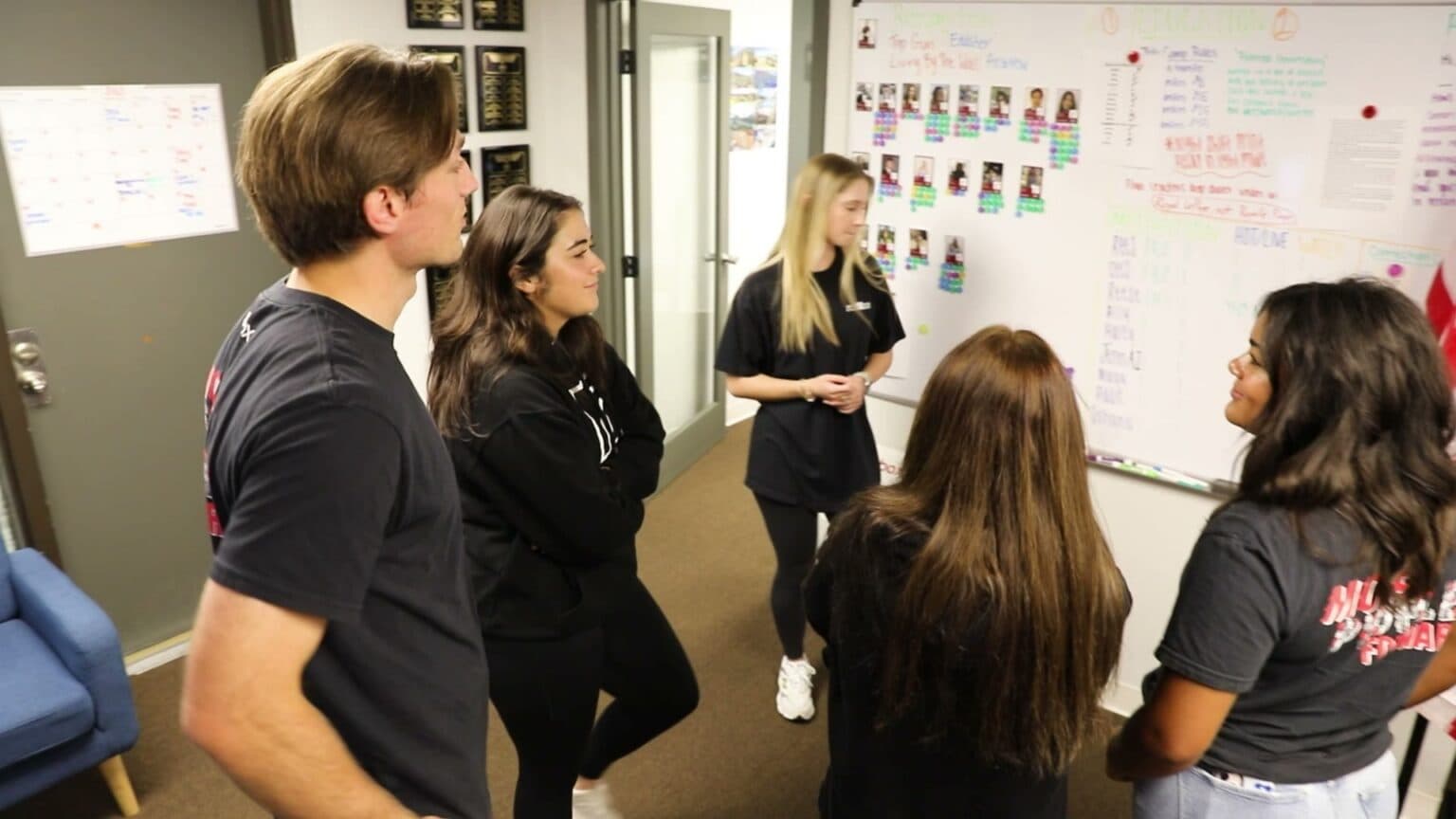
Every applicant takes a DISC assessment, because we want people who love to talk and do not leave awkward pauses. They do a phone interview so we can hear tone and confidence, then an in-person interview, then the step we learned the hard way: they come in and observe a live shift before anyone is hired. The observation is their interview of us. They hear the scripts, the objections and the rejection, and they decide whether they want it. Callers work four-hour shifts so they are fresh. We coach every day and review calls, so the standard stays high. Our culture page shows more of how we train.

We know we are borrowing these people's talent for a couple of years before they walk the stage with job offers. That is the point. Being an ISA is mastery of the fundamental sales skills, and it is the entry-level position of a lucrative career. Nobody who is great at it should do it forever. A team needs a consistent source of great talent, not one great hire.
Human callers and AI callers
I get asked about this every week now, so here is where I stand.
We have built a lot of technology. New leads reach a caller within seconds, and results are logged in your CRM automatically. That is what technology is for: getting a person onto the right call faster and documenting what happened.
The conversation itself is a person. Consumers today are barraged with AI texts, AI calls and automated emails, and it is harder than ever to get them on the phone. When you do, a real conversation is the whole value. The lead can tell. Your agent can tell when the handoff notes read like a human listened. I wrote about this in August: as the value of a lead goes down, live conversations are the currency.
So use technology for the acknowledgment text, the routing, the summaries and the reporting. Put a trained human on the call that decides whether someone trusts your team.

What a good handoff looks like
A live transfer is the best outcome of an ISA call, and it is also where most ISA programs break. A good one does three things. The consumer agrees to the introduction before anyone is put on hold. The agent hears the context, who this is and what they are looking for, before the consumer is connected. And the introduction uses names, so the consumer is talking to a person, not being transferred.
When an agent does not pick up, the consumer should not pay for it. We leave a detailed note in your CRM so your team can call back. People who are months away stay on our follow-up. Every month you get an opportunity report of the conversations we surfaced. You can see a real one here.
We do this inside the CRM you already use, including Follow Up Boss, CINC, Lofty, Sierra Interactive, BoomTown, Brivity, BoldTrail, Real Geeks and Suresend. New leads come to us for immediate calling, and every call is logged on the lead so your team can act on it.
How to judge any ISA, including us
Whether you hire in-house or hire a service, ask these before you sign anything, and make the answers measurable.
- Where are the callers, and who is on the phone at 7 pm on a Tuesday? Coverage is the number one strategy. Get the hours in writing.
- How fast is the first call, measured? Not "within the hour." Ask for the actual median time from registration to first dial.
- How many attempts does each lead get, measured? Ask to see the attempt counts on last month's leads.
- Can I listen to the calls? If the answer is no, the answer is no.
- What does my CRM look like afterward? Tags, notes, and what your agents are expected to do with each.
- Who owns the long-term leads? Someone has to keep calling the twelve-month people. Find out who.
- What happens to my database? Thousands of old leads are the cheapest opportunities you have. Ask who will call them and when.
- Do your agents answer live transfers? This is the question for your own team. Every unanswered transfer was a buyer or seller on the phone.
The numbers to watch every week
Once an ISA is working, in-house or outsourced, these are the numbers I would put on one page and look at every week:
- Speed to first dial. The median time from registration to the first call, not the average, which hides the overnight leads.
- Attempts per lead. How many calls each new lead got in its first seven days.
- Contact rate. The share of leads someone actually spoke with.
- Opportunities. Conversations with a buyer or seller who wants to move within ninety days and is not working with another agent.
- Live transfers. And how many of them your agents answered.
- Appointments held and closings. Traced back to the call that started them, so you know what the calling produced.
What it costs
Compare the full cost over the same coverage. An in-house ISA is a salary plus payroll taxes, benefits, software, your coaching time, and a replacement search when they get licensed. To cover evenings and weekends you would need more than one.
For a sense of the salary: ZipRecruiter's listing data put the U.S. average for a real estate inside sales agent at $69,398 a year as of October 27, 2026, with most between $50,000 and $86,500. Icenhower Coaching, which coaches a lot of ISA teams, reports a common structure of a $3,000 to $3,500 monthly base plus a bonus of roughly 7 to 10 percent on closed transactions, and recommends paying on appointments held rather than appointments set.
Our clients Eric Heinen and Julie Youngblood put the math better than I can. Eric pays for the leads, the CRM and the lender relationship before anyone picks up the phone. "I'm already making 85, 90% of the spend up front," he said, "when I know that that entire investment rests specifically on how quickly will a human being engage with that person." Leaving that call to an agent working on a split, and hoping they reach the lead in ninety seconds, "seems almost foolish."
Rokrbox plans scale with your business. See how pricing works, or bring your monthly lead count and your CRM to a conversation and we will scope it.
Teams that have done this for a decade
Spring Bengtzen was our first client in 2013. Her team at Utah Life Real Estate Group generated a 421 percent return on its internet leads with rokrbox doing the calling. In her words: "If you are in real estate and generating online leads, rokrbox is hands down the best decision you could make for your business."
Jeff Cohn, whose Omaha team went from 70 to more than 700 sales in six years by his account, flew to College Station to spend a day in our office studying how we hire and keep callers. Adrienne Lally, who runs the number one real estate team in Hawaii, said it simplest: "I love when rokrbox makes the calls and passes me who wants to talk now. This saves me time."
One client, Justin, sent us what he remembers as about four thousand old leads for a database mining project. Closings of $1.6 million, $1.4 million and $600,000 came out of it, about $3.6 million in transactions from leads he had written off.
Those are their numbers, reported by them, and your results depend on your leads, your market and whether your agents answer the phone. But after thirteen years and three million leads, the pattern holds: call fast, call often, have a real conversation, and hand the agent someone who wants to talk. Meet the team that makes the calls.
Common questions about real estate ISAs
What does ISA stand for in real estate?
Inside sales agent. Some teams say inside sales assistant, and a remote or outsourced one is often called a virtual ISA. Whatever the title, it is the person who calls and qualifies a team's leads by phone so the agents can spend their time with clients who are ready.
Is a real estate ISA a licensed agent?
Usually not, and at rokrbox never. Our callers do not discuss properties, prices, availability or anything else that requires a license. The call is about the consumer's needs and timing, and it ends with an introduction to an agent who can help.
Does an ISA generate leads?
No. An ISA works the leads you already generate: new website registrations, portal leads, and the older contacts in your CRM. Rokrbox does not sell leads. We call yours.
What is the difference between an ISA and an appointment setter?
An appointment setter books a time on a calendar. An ISA owns the whole follow-up: the instant call, the repeated attempts, the qualifying conversation, the live transfer or appointment, and the nurture calls for people who are not ready yet. Every good ISA sets appointments. Not every appointment setter does the follow-up that produces them.
What is the difference between an ISA and a virtual assistant?
An ISA is a phone-first sales role: respond, follow up, qualify, hand off. A virtual assistant is usually an administrative role: transaction paperwork, scheduling, marketing tasks. Some people use the terms loosely. Ask what share of the day is spent on the phone with leads.
What is LPMAMA?
LPMAMA is a common ISA qualifying checklist: Location, Price, Motivation, Agent, Mortgage and Appointment. It lists the facts an agent needs before a first meeting. Rokrbox's C.A.R.E. conversation covers the same ground, but as a conversation about the person rather than a form read over the phone.
How fast should an ISA call a new lead?
Within minutes, and ideally within seconds. The odds of qualifying an internet lead drop sharply once five to ten minutes have passed. Rokrbox calls new leads within seconds of registration.
How many times should an ISA call a lead?
More than most teams think. Reaching a registered internet lead reliably takes six or more attempts, and most agents stop after one or two, which is why so many leads never convert. Rokrbox calls a new lead up to seven times in the first week, at different times of day, and keeps following up with the people who are not ready yet.
What is a live transfer?
A live transfer is when the ISA has a buyer or seller on the phone who is ready to talk with an agent, puts the consumer on a brief hold, rings your team, introduces the agent by name, and connects the call. If no agent answers, we leave notes in your CRM so your team can call back.
How much does a real estate ISA make?
ZipRecruiter's listing data put the U.S. average for a real estate inside sales agent at $69,398 a year as of October 27, 2026, with most salaries between $50,000 and $86,500. Icenhower Coaching reports that the teams it coaches commonly pay a base of $3,000 to $3,500 a month plus a bonus of roughly 7 to 10 percent on closed transactions. Pay varies widely by market.
How much does a real estate ISA cost?
An in-house ISA costs a salary plus payroll taxes, benefits, tools, management time and the turnover that comes when a good one gets licensed. Rokrbox plans scale with your business. Compare the two on the same coverage: who is calling at 7 pm on a Tuesday?
Is there a certification for real estate ISAs?
Yes. The National Association of REALTORS lists an Inside Sales Agent certification from the Residential Real Estate Council, earned through a short online course, and several coaching companies sell their own ISA training. A certificate shows someone studied the role. Listening to their calls shows whether they can do it.
Which CRMs does rokrbox work with?
Rokrbox works inside the CRM you already use, including Follow Up Boss, CINC, Lofty, Sierra Interactive, BoomTown, Brivity, BoldTrail, Real Geeks and Suresend. Every call is logged on the lead in your CRM.
Is rokrbox an AI calling service?
No. Rokrbox's callers are people in College Station, Texas. We use technology to route leads to callers in seconds, record calls and tag results in your CRM, but the conversation with your lead is a human one.
Sources and notes
Josh Cunningham founded rokrbox and runs it, so this guide reflects that perspective. Rokrbox figures are company-reported totals since 2013. Client results are reported by the clients named and are not a forecast of yours.
- Rokrbox call data, 2013 to present, as presented by Josh Cunningham in the rokrbox webinar Internet Lead Conversion Secrets
- The rokrbox Method and C.A.R.E. framework
- Josh Cunningham, Live Conversations Are the Currency Now (August 25, 2026)
- ZipRecruiter, Real Estate Inside Sales Agent salary (as of October 27, 2026)
- Icenhower Coaching & Consulting, Real Estate ISA: How to Hire, Pay, and Keep Inside Sales Agents
- National Association of REALTORS, Inside Sales Agent (ISA) certification